
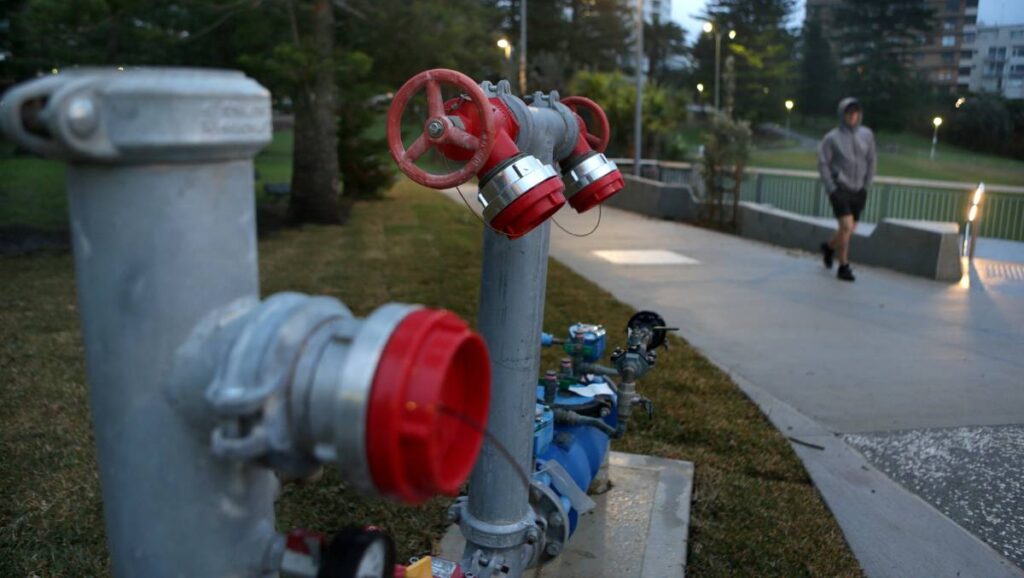
When a fire hydrant system is needed, there are no second chances.
Whether it’s a warehouse, office building, shopping centre, school, apartment complex or industrial facility, firefighters rely on a building’s hydrant system to deliver the water flow and pressure necessary to control a fire and protect lives and property.
Unfortunately, many building owners assume that because a hydrant system was commissioned correctly when the building was constructed, it will continue to perform indefinitely. In reality, fire protection systems age. Valves seize, seals deteriorate, pipework corrodes, pressure reducing devices wear, booster assemblies degrade, and building alterations can change the hydraulic performance of an entire installation.
This is precisely why Australian Standards require ongoing inspection, testing and maintenance throughout the life of the system.
For owners and managers of commercial buildings across Victoria, understanding these requirements is essential—not only to satisfy compliance obligations, but to ensure the system will perform exactly as intended when called upon during an emergency.
Routine servicing of fire hydrant systems is often viewed simply as another compliance obligation or annual expense.
In reality, it is one of the most important risk management activities undertaken within a commercial building.
Unlike portable extinguishers or smoke alarms, a fire hydrant system is designed to supply large volumes of water to firefighters during a major fire. If the system cannot deliver its designed flow or pressure, firefighting operations may be significantly compromised.
The purpose of routine servicing is therefore not simply to “tick a box” but to continually verify that the hydrant installation remains capable of performing to the standard it was originally designed and approved to achieve.
Several Australian Standards work together to govern fire hydrant systems throughout their lifecycle.
Understanding the purpose of each standard helps building owners appreciate why ongoing maintenance is so important.
The AS 2419 series establishes the requirements for the design, installation, commissioning and acceptance testing of fire hydrant systems.
It defines the hydraulic performance required for a hydrant installation, including minimum flow rates, operating pressures, pipe sizing, hydrant locations, fire brigade booster arrangements and system commissioning.
In simple terms, AS 2419 answers the question:
“How should the fire hydrant system be designed and installed?”
Once the system has been commissioned and handed over to the building owner, however, the focus shifts from installation to ongoing maintenance.
AS 1851 provides the routine servicing requirements for installed fire protection systems.
Section 4 specifically addresses fire hydrant systems and establishes maintenance routines ranging from six-monthly inspections through to comprehensive five-year servicing activities.
Rather than simply confirming that hydrants remain visible or accessible, AS 1851 is intended to ensure the entire hydrant system continues to perform as originally designed throughout its operational life.
Routine servicing includes inspection, functional testing, servicing of mechanical components, overhaul of critical equipment, performance verification and detailed record keeping.
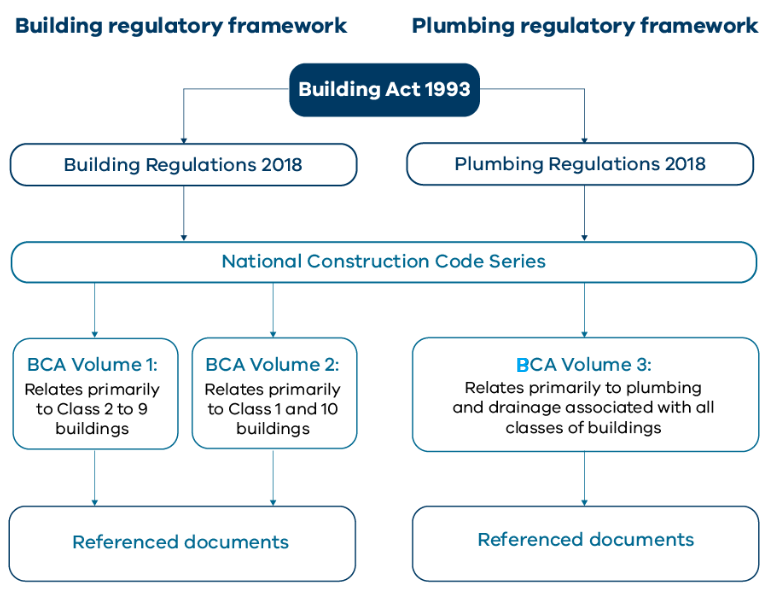
In Victoria, fire hydrant systems form part of a building’s Essential Safety Measures (ESMs).
Under the Building Act 1993 and Building Regulations 2018 (Victoria), building owners are responsible for ensuring Essential Safety Measures continue to perform to the required standard throughout the life of the building.
This responsibility cannot simply be transferred to a contractor or the occupier.
While a competent fire protection company performs inspections and testing, the legal responsibility for maintaining compliance ultimately remains with the building owner.
Failure to properly maintain Essential Safety Measures may expose owners to enforcement action, insurance complications and significant liability should a fire occur.
The Building and Plumbing Commission (BPC) formally Victorian Building Authority (VBA) has reinforced the importance of hydrant testing through Practice Note ESM 05 – Fire Hydrant System Testing.
The Practice Note emphasises that fire hydrant systems must continue to demonstrate the hydraulic performance for which they were originally designed.
It also recognises that routine servicing under AS 1851 is essential in maintaining ongoing compliance.
Importantly, the BPC highlights that suitable facilities should exist to safely undertake hydrant flow testing and that commissioning and ongoing testing remain critical components of system reliability.
This reinforces an important point:
A visual inspection alone cannot confirm that a hydrant system will actually perform during a fire.
Only appropriate inspection, maintenance and performance testing can provide that level of confidence.
One of the most misunderstood aspects of AS 1851 is that hydrant servicing is progressive.
Different maintenance activities occur at different intervals throughout the life of the system.
Routine servicing may include:
Each servicing interval builds upon previous inspections to progressively verify the condition of the installation.
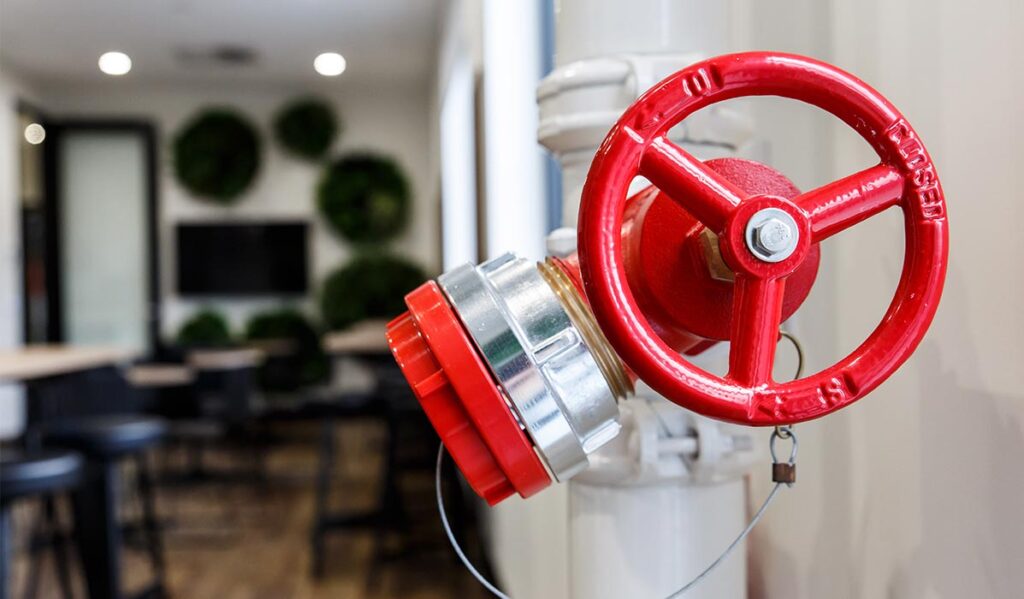
Perhaps no aspect of hydrant maintenance is more misunderstood than the five-year servicing requirements.
Many building owners believe the five-year service simply involves connecting a pump and performing a hydrostatic pressure test.
This is incorrect.
The five-year routine is a comprehensive overhaul intended to restore and verify the ongoing serviceability of critical system components before performance testing is undertaken.
In many respects, it represents the most technically demanding maintenance activity performed on a hydrant system during its operational life.
One of the most overlooked aspects of five-year servicing is the order in which the work should be completed.
The overhaul is not simply another maintenance activity—it is a critical prerequisite to subsequent testing.
During the overhaul, serviceable components throughout the hydrant installation are dismantled, inspected and restored where required.
Depending on the system configuration, this may include servicing or rebuilding:
Only after these components have been inspected and restored to a serviceable condition should pressure testing be undertaken where required.
This approach reflects the intent of AS 1851.
Testing a system before carrying out prescribed overhaul activities may result in failures that are simply due to worn seals, deteriorated valve components or serviceable items that should have been rebuilt as part of the overhaul.
In other words, the overhaul prepares the system for meaningful testing.
Another common misconception is that every hydrant system requires hydrostatic testing every five years.
This is not the case.
The requirement for hydrostatic testing depends upon the configuration of the hydrant installation and the equipment installed.
For systems incorporating a Fire Brigade Booster, AS 1851 includes hydrostatic pressure testing as part of the prescribed maintenance activities.
However, where a hydrant system does not incorporate a Fire Brigade Booster, hydrostatic testing is generally not a prescribed five-year routine activity, although all other applicable overhaul, inspection and testing requirements remain.
This distinction is frequently misunderstood throughout the industry.
Unfortunately, some building owners are instructed to undertake hydrostatic testing regardless of system configuration, while others are unaware that comprehensive five-year overhauls are still required even where hydrostatic testing is not.
Understanding the difference ensures building owners receive maintenance that is both technically correct and aligned with the applicable requirements of the Standard.
System Configuration | Five-Year Overhaul | Hydrostatic Testing |
Hydrant system incorporating a Fire Brigade Booster | ✔ Required | ✔ Required |
Hydrant system without a Fire Brigade Booster | ✔ Required | Generally not required as part of the prescribed five-year routine |
Every system should be individually assessed to determine the applicable servicing requirements.
Where required, hydrostatic testing is designed to verify the structural integrity of the hydrant pipework and associated fittings.
The system is pressurised above its normal operating pressure to confirm that it can safely withstand operating conditions without leakage or structural failure.
Hydrostatic testing may identify:
However, hydrostatic testing is only one component of comprehensive system maintenance.
Passing a pressure test does not necessarily mean the hydrant system is fully compliant.
This is one of the most important messages building owners should understand.
A hydrant system may successfully pass a hydrostatic pressure test while still containing numerous defects that could compromise emergency operation.
Examples include:
Only comprehensive servicing in accordance with AS 1851 can identify these issues.
Hydrostatic testing alone cannot.
Hydraulic flow testing provides one of the clearest indicators of system performance.
Unlike static inspections, flow testing measures the actual water available to firefighters during an emergency.
Flow testing verifies:
These tests provide confidence that the hydrant system continues to perform as intended under realistic operating conditions.
Designed to accomplish two performance criteria.
AS 1851 places significant emphasis on documentation.
Accurate service records demonstrate:
Comprehensive documentation assists building owners in demonstrating that Essential Safety Measures have been appropriately maintained throughout the life of the building.
Not every fire protection company has the capability to undertake the full range of hydrant servicing required under AS 1851.
Many providers perform routine inspections but subcontract specialised activities such as five-year overhauls, flow testing or hydrostatic testing.
Building owners should ensure their service provider has the technical capability, equipment and experienced personnel to perform the complete scope of required maintenance.
This not only improves efficiency but provides confidence that servicing is undertaken consistently and in accordance with the applicable Australian Standards.
At VERST Fire Services, we specialise in the inspection, testing, servicing and overhaul of commercial fire hydrant systems throughout Melbourne and regional Victoria.
Our experienced technicians are equipped to perform the full range of maintenance activities required under AS 1851 Section 4, including:
Our approach is based on understanding not only what the Standard requires, but why those requirements exist.
By undertaking servicing in the correct sequence and applying best industry practice, we help building owners ensure their fire hydrant systems remain compliant, reliable and ready to perform when needed most.
A fire hydrant system is one of the most critical life safety systems within any commercial building.
Maintaining that system requires far more than an annual inspection or an occasional pressure test.
Proper maintenance involves understanding the relationship between AS 2419, AS 1851, Victorian building legislation and the practical realities of system ageing.
Most importantly, it requires recognising that the five-year overhaul is the foundation of long-term system reliability. Components should be restored before they are tested, and hydrostatic testing should only be undertaken where it is applicable to the system configuration.
When servicing is performed correctly, building owners gain more than compliance—they gain confidence that their hydrant system will perform when firefighters need it most.
For readers seeking further information, the following documents provide the legislative and technical framework governing fire hydrant systems in Victoria: